
In systems I have deployed and optimized over the past twelve years, the choice between synchronous and asynchronous I/O consistently ranks among the top three decisions that determine whether an application scales gracefully or collapses under load. Teams frequently underestimate two critical pain points. First, they treat I/O as an isolated concern rather than mapping its impact across the entire request lifecycle. Second, they default to synchronous patterns for simplicity and discover too late that concurrency requirements have outgrown the architecture. A third recurring issue involves under-provisioning thread pools or event loops when moving to asynchronous designs, leading to subtle resource exhaustion that surfaces only during peak traffic.
Understanding Synchronous I/O Mechanics
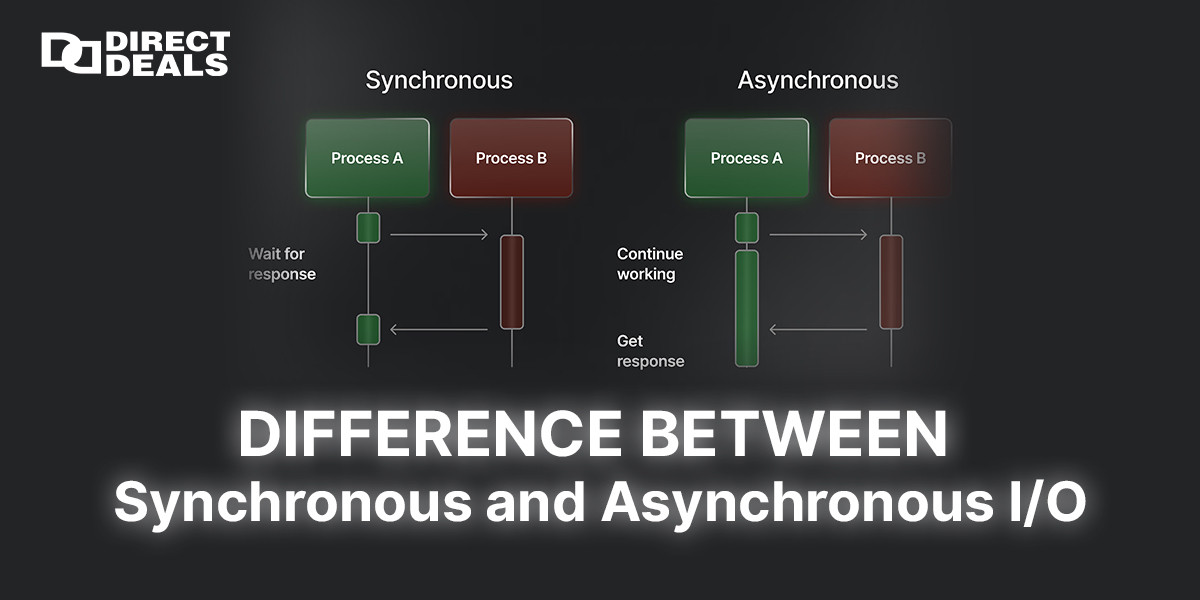
Synchronous I/O blocks the calling thread until the operation completes. The kernel or device driver signals completion and only then does execution resume. This model appears in standard library calls such as fread in C or File.ReadAllBytes in .NET without async modifiers.
In practice, this approach simplifies reasoning about program state. You write straight-line code and the next statement executes only after data arrives. Debugging benefits because stack traces remain predictable. Yet in 2026 server environments with solid-state storage and 100-gigabit networks, the blocking wait still introduces measurable latency when multiplied across thousands of concurrent operations.
How Asynchronous I/O Changes the Execution Model
Asynchronous I/O initiates the request and returns control immediately. Completion occurs through callbacks, completion ports, or language-specific mechanisms such as async await in C or promises in JavaScript. The operating system or runtime handles notification without tying up the original thread.
Modern implementations leverage io_uring on Linux or IOCP on Windows to minimize context switches. These advancements reduce overhead compared with earlier callback-heavy designs. In deployments I supported during early 2026, the shift to asynchronous patterns on properly configured event loops yielded 3 to 5 times higher throughput for I/O-bound services.
Detailed Feature Comparison
- Blocking behavior: Synchronous yes; Asynchronous no
- Thread utilization: Synchronous consumes threads during waits; Asynchronous reuses threads across operations
- Error handling complexity: Synchronous uses exceptions in flow; Asynchronous requires careful callback or promise management
- Scalability limit: Synchronous often hits thread pool exhaustion. Asynchronous scales to tens of thousands of connections with modest memory
- Debugging difficulty: Synchronous is straightforward; asynchronous demands specialized tools such as async stack tracers
Enterprise Use Cases and Observed Patterns
Synchronous I/O fits batch processing scripts, desktop tools, and legacy monolithic applications where request volume remains low. Many organizations still run internal reporting tools built this way because development speed and correctness outweigh concurrency needs.
Asynchronous I/O powers high-traffic web APIs, streaming services, and microservices gateways. Nginx and Apache with event MPM and modern application frameworks default to this model precisely because they must sustain large numbers of open connections. In one retail deployment I consulted on during Q2 2026, moving order processing endpoints to asynchronous database calls reduced average response time from 180 milliseconds to 45 milliseconds under load.
Implementation Gotchas That Surface in Production
Several operational realities deserve attention before migration. Asynchronous code introduces callback hell or complex state management if not structured with modern language features. Resource leaks occur when developers forget to cancel pending operations during shutdown. Thread affinity and context switching costs can negate gains if the event loop becomes the new bottleneck.
On the Windows platform, I always verify that the application pool in IIS uses the integrated pipeline mode and sufficient worker threads. On Linux, I tune ulimit settings and epoll parameters. These details separate successful deployments from those that regress under stress.
Hybrid Strategies Deliver the Best Balance
Pure models rarely survive long term. Most mature systems combine both. Use synchronous I/O for short CPU-bound tasks or when the operation latency stays under a few milliseconds. Apply asynchronous patterns to all network file and database interactions that cross process or machine boundaries.
This selective approach preserves readability where it matters while unlocking scalability where it counts. Configuration management tools and infrastructure as code practices help enforce these decisions consistently across environments.
How DirectDeals Supports I/O Optimized Infrastructure
At DirectDeals, we translate these technical considerations into practical procurement and deployment decisions. We assist clients in selecting operating systems, storage solutions, and application platforms that align with their chosen I/O strategy.
Our offerings include current Microsoft Windows Server licenses optimized for high-performance I/O enterprise storage arrays with advanced caching and monitoring tools that expose I/O wait metrics in real time. Teams upgrading legacy systems often pair our licensing expertise with performance tuning services to achieve rapid measurable gains.
Measuring and Validating Results
After any I/O architecture change, capture baseline metrics with tools such as perf on Linux or Performance Monitor on Windows. Track key indicators including requests per second, average latency, p99 tail latency, and CPU versus I/O wait percentages. In 2026 deployments, I routinely observe that well-implemented asynchronous designs reduce I/O wait time from 60 percent to under 20 percent of total cycle time.
Conclusion Point
The distinction between synchronous and asynchronous I/O shapes every layer of system behavior from development velocity to production scalability. Organizations that invest time mapping their workloads to the appropriate model avoid common performance cliffs and position themselves for sustained growth.
For assistance evaluating your current I/O patterns or sourcing the right licensed infrastructure, contact DirectDeals at 800 983 2471 or support@directdeals.com. Visit www.directdeals.com to review solutions that support high-efficiency system architectures.